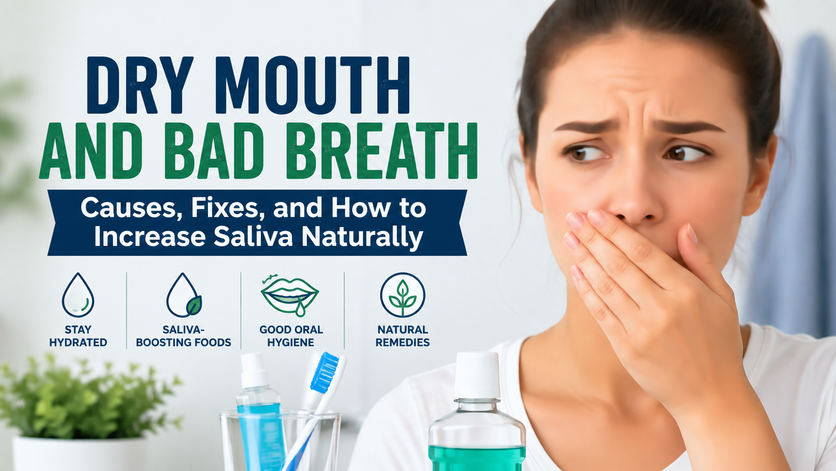
Dry Mouth and Bad Breath: Causes, Fixes, and How to Increase Saliva Naturally
Here’s a quick opinion: dry mouth is one of the most overlooked causes of bad breath. People tend to focus on brushing, flossing, mouthwash… all good things. But if your mouth is dry, those steps only go so far.
Because without enough saliva, bacteria don’t get cleared out. They build up. And that’s where the smell starts. If you’ve ever woken up with strong morning breath or noticed your mouth feels sticky during the day, this might be your missing piece.
What’s the Connection Between Dry Mouth and Bad Breath?
Saliva isn’t just “moisture.” It’s your mouth’s built-in cleaning system. It helps:
- Wash away food particles
- Neutralize acids
- Control odor-causing bacteria
When saliva levels drop, bacteria get comfortable. They multiply, break things down, and release those sulfur compounds responsible for bad breath.
So even if you brush well… the environment still favors odor. That’s why some people say, “My hygiene is good, but my breath still isn’t.” Dryness is often the reason.

A Real-Life Scenario (You Might Recognize This)
You brush your teeth in the morning. Everything feels fresh. An hour later? Not so much. Or maybe:
- Your breath is worst when you wake up
- Coffee seems to make things worse
- Your mouth feels dry when you’re stressed or busy
If this sounds familiar, it’s not just about cleaning, it’s about keeping your mouth hydrated and active.
Common Causes of Dry Mouth
It’s not always obvious why saliva production drops. Some of the most common reasons:
Dehydration. Simple, but very common. If you’re not drinking enough water, your body prioritizes other functions first.
Medications. A lot of everyday medications list dry mouth as a side effect—especially antihistamines, antidepressants, and some blood pressure meds.
Mouth breathing. This one gets overlooked. If you breathe through your mouth (especially while sleeping), you lose moisture overnight. That’s why morning breath can feel so intense.
Caffeine and alcohol. They’re mildly dehydrating. Not a problem in small amounts—but if your intake is high, it can add up.
Signs You Might Have Dry Mouth
Not always dramatic. Sometimes it’s subtle.
- Sticky or dry feeling in your mouth
- Frequent thirst
- Cracked lips
- Bad breath that returns quickly after brushing
- Difficulty swallowing dry foods
If you’ve noticed a few of these, dryness is likely playing a role.

How to Fix Dry Mouth Naturally
Let’s keep this practical. No complicated routines.
1. Drink water consistently (not just when you’re thirsty).
This sounds obvious; but timing matters. Small sips throughout the day work better than drinking a lot at once.
Tip: If your mouth already feels dry, you’re a bit behind. Try to stay ahead of it.
2. Chew sugar-free gum. This is one of the easiest ways to stimulate saliva. It’s especially helpful after meals, during long work sessions, and when you can’t brush right away. This is one of the simplest habits that actually makes a difference.
3. Eat foods that stimulate saliva. Crunchy fruits and vegetables—like apples and carrots—naturally encourage saliva production. They also help clean your teeth a bit in the process. Not a replacement for brushing, but a nice bonus.
4. Breathe through your nose (when possible). This one takes awareness. If you tend to mouth-breathe (especially at night) it can dry things out significantly. That said, this isn’t always easy to fix overnight. But noticing it is a good start.
5. Use the right mouthwash. Some mouthwashes actually make dryness worse. Alcohol-based formulas can dry out your mouth over time. If dryness is your issue, switching to an alcohol-free option tends to work better.
What Works Better Than You’d Expect
A quick contrast:
Brushing more often → helps, but limited if dryness continues
Increasing saliva → addresses the root cause
That’s why focusing on hydration and saliva flow often gives faster, more noticeable results.
It’s a shift, but a useful one.
Products That Can Help (If You Want Extra Support)
If natural methods aren’t enough, there are products designed specifically for dry mouth.
You might consider:
- Saliva substitutes or oral moisturizers
- Xylitol-based lozenges or gum
- Hydrating mouth sprays
Not everyone needs these. But they can be a solid option if your dryness is persistent.
Daily Routine for Better Breath (When Dry Mouth Is the Cause)
If you’re not sure where to start, keep it simple:
Morning. Brush and drink water.
During the day. Sip water regularly. Chew sugar-free gum after meals
Evening. Brush. Optional: alcohol-free rinse
Before bed. Hydrate lightly (not too much, just enough). Nothing fancy—but it works.
One Thing to Keep in Mind
Dry mouth isn’t always constant. It can come and go depending on:
- Your hydration
- Your stress levels
- Your diet
- Even the weather
So if your breath seems inconsistent, this might explain why.

When It Might Be Something Else
If you’ve improved hydration and habits but still notice persistent bad breath, there could be other factors involved, like sinus issues or even conditions such as gastroesophageal reflux disease.
That said, dry mouth is often part of the picture, even if it’s not the only cause.
Final Tips
Dry mouth and bad breath tend to go hand in hand. But once you focus on supporting saliva instead of just masking odor, things usually start to improve.
If this sounds like your situation, start small drink more water, and add gum after meals. Pay attention to how your mouth feels throughout the day.
It’s one of those simple adjustments that quietly solves a frustrating problem. And once it clicks, it’s hard to ignore how much of a difference it makes.
 using WordPress and
Comments are closed