Bad Breath and Bleeding Gums: How to Treat Gingivitis and Prevent Periodontitis
Let’s be honest, bleeding gums aren’t normal. A lot of people brush, see a little blood, and move on. Maybe you’ve done that too. It doesn’t feel urgent.
But when bleeding gums show up alongside bad breath, it’s usually a sign that something deeper is going on. The good news? Catch it early, and it’s very fixable.
What Bad Breath + Bleeding Gums Usually Means
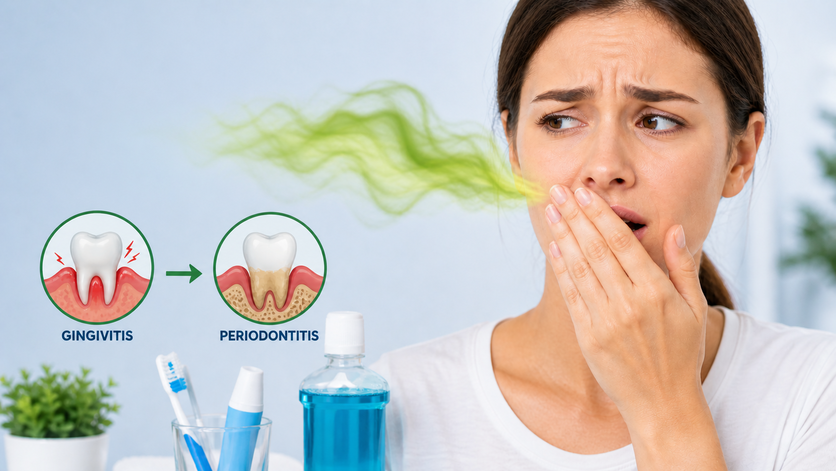
Short version: bacteria have moved below the surface. When plaque builds up along the gumline, it irritates the gums. Over time, this leads to inflammation, what we call gingivitis.
That inflammation creates small pockets where bacteria thrive. And those bacteria? They produce the kind of odor that brushing alone won’t fix. So if you’ve ever thought, “Why does my breath still smell even after brushing?”—this is often why.

A Quick Reality Check (Most People Miss This)
If your gums bleed when you floss… That’s not a reason to stop. It’s actually a reason to keep going—gently, of course.
Bleeding is usually a sign of inflammation, not damage from flossing itself. And in many cases, it improves within a week or two of consistent care. It feels counterintuitive. But it works.
Early Signs You Shouldn’t Ignore
Sometimes it’s subtle. Other times, not so much. Look out for:
- Gums that bleed during brushing or flossing
- Red or slightly swollen gum tissue
- Persistent bad breath that doesn’t go away
- A “metallic” taste in your mouth
If this sounds familiar, you’re likely dealing with early-stage gum inflammation—not just surface-level buildup.
How to Treat gingivitis at Home
If you catch it early, you can often turn things around without anything complicated.
1. Floss daily (yes, even if it bleeds). This is the shift that matters most. Flossing removes plaque from areas your toothbrush can’t reach—especially under the gumline.
Tip: Start slow. If your gums are sensitive, floss gently once a day, preferably at night.
2. Brush with intention, not force. Aggressive brushing doesn’t help here. In fact, it can make things worse. Use a soft-bristled brush and focus on the gumline, and small circular motions Taking your time.
Tip: This tends to work better than quick, forceful brushing.
3. Add an antibacterial rinse. A good rinse can help reduce bacteria in those hard-to-reach areas. Look for alcohol-free formulas (less drying) and ingredients that target bacteria, not just odor. Not essential—but definitely helpful if you’re dealing with persistent symptoms.
4. Stay consistent (this part matters more than you think). Here’s where most people slip. They improve their routine for a few days… then go back to old habits. But gum health responds to consistency, not intensity.
In many cases bleeding improves within 7–10 days. Breath starts to noticeably improve shortly after. Simple, but underrated.

When It Turns Into periodontitis
If early gum issues aren’t addressed, they can progress. This is where things get more serious.
Instead of surface inflammation, the infection moves deeper—affecting the structures that support your teeth.
You might notice receding gums, loose teeth, and strong, persistent bad breath. Pain or discomfort when chewing. At this stage, home care alone usually isn’t enough. That said, not everyone reaches this point. Early action makes a big difference.
Professional Treatments That Actually Help
If your symptoms stick around despite improving your routine, it’s worth seeing a dentist. Common treatments include:
- Professional cleaning (removes hardened plaque)
- Deep cleaning (scaling and root planing) for more advanced cases
- Ongoing monitoring to prevent progression
It’s not as intense as it sounds. And in many cases, it solves the issue faster than trying to manage it alone.
Real-Life Situations (Where This Shows Up)
A few patterns you might recognize:
You floss before a dentist visit → bleeding suddenly becomes obvious
Your breath is worse in the afternoon → bacteria have had time to build up
You brush regularly but skip flossing → gums stay irritated beneath the surface
If any of these feel familiar, you’re not alone.
Prevention Tips That Actually Stick
Once things improve, the goal is to keep them that way—without overcomplicating your routine.
- Floss daily (this is non-negotiable)
- Replace your toothbrush every few months
- Don’t ignore early signs like bleeding or sensitivity
- Stay hydrated (dry mouth can make gum issues worse)
If you’re not sure where to start, focus on flossing first. That’s usually the missing piece.
One Thing to Keep in Mind
Bad breath from gum issues isn’t just about smell. It’s your body signaling that bacteria are affecting your gum health. That doesn’t mean something is seriously wrong—but it does mean it’s worth paying attention to.

A Simple Routine You Can Follow
Morning. Brush (gentle, along the gumline)
Night. Brush and floss. Optional: antibacterial rinse
Weekly. Check for bleeding or improvement
Nothing complicated. Just consistent.
Final Tips
Bleeding gums and bad breath often go together, but they don’t have to stick around. If you catch it early and stay consistent, you can usually reverse the problem before it becomes something more serious like periodontitis.
And if it’s been lingering for a while? Getting professional help is a smart move—not a last resort. Either way, it’s fixable. That’s the important part.

 using WordPress and
Comments are closed