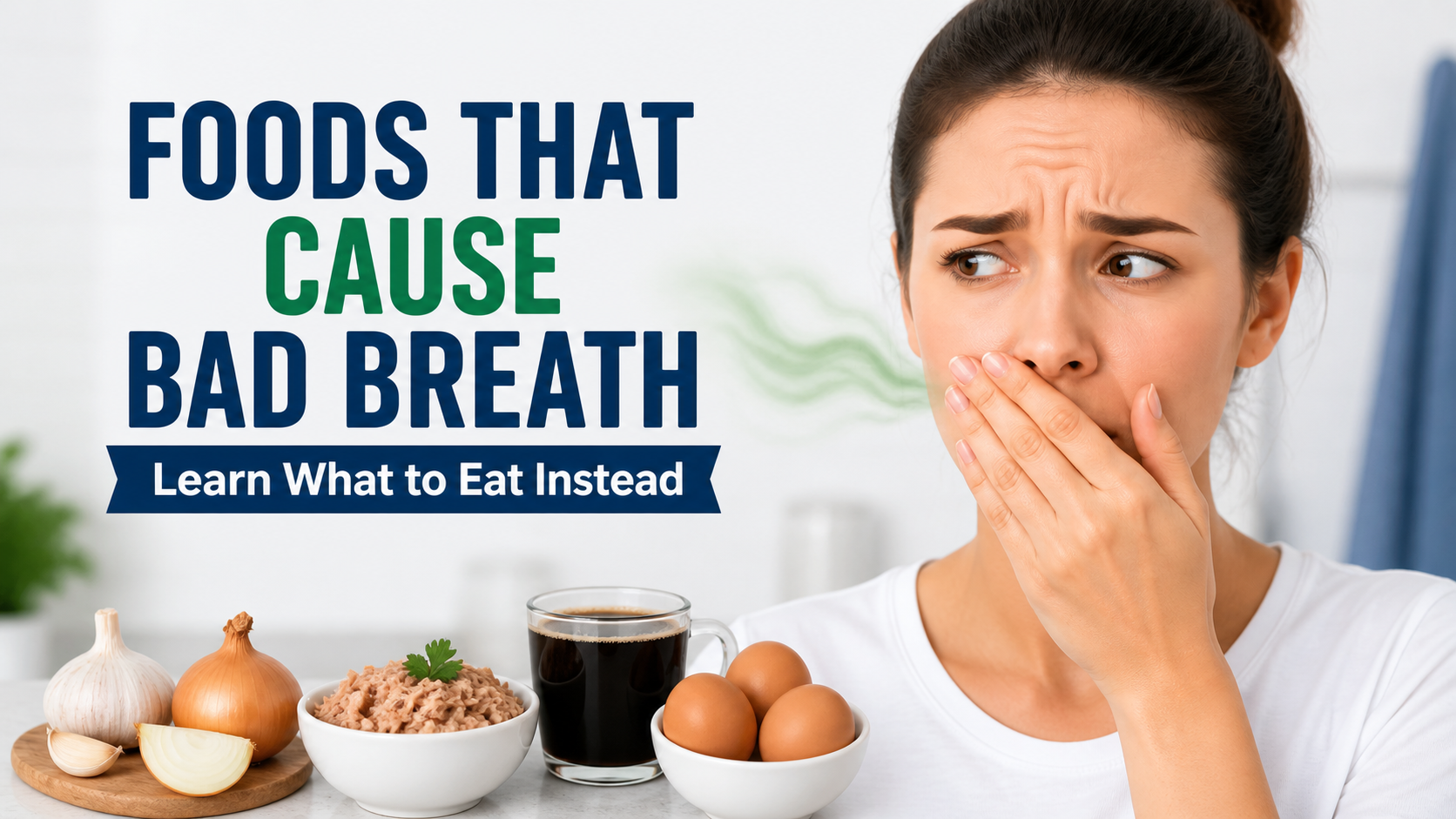
Foods That Cause Bad Breath and What to Eat Instead
Here’s the thing: some foods don’t just affect your breath for a few minutes… they stick around for hours. Even after brushing.
If you’ve ever eaten something and thought, “Why is this still lingering?”—you’re not imagining it. Certain foods affect your breath from the inside out, not just in your mouth. And that changes how you deal with it.
Why Some Foods Cause Bad Breath (It’s Not Just Your Mouth)
Quick explanation; nothing too technical. When you eat foods like garlic or onions, they release compounds that enter your bloodstream. From there, they travel to your lungs.
So when you breathe out… the smell comes with it. That’s why brushing, flossing, or mouthwash only go so far. You’re not just dealing with your mouth, you’re dealing with your system.

A Quick Real-Life Scenario
Let’s say you grab a quick lunch—something with garlic or onions. You brush your teeth after. Maybe even use mouthwash. And yet… an hour later, your breath still isn’t great.
That’s because the source isn’t sitting on your teeth anymore. It’s internal. Frustrating, but very normal.
Top Foods That Cause Bad Breath
Not all foods are equal here. Some are much more likely to cause lingering odor.
Garlic and Onions. These are the big ones. They contain sulfur compounds that are absorbed into your bloodstream and released through your breath later.
Cooking them helps a bit—but not completely. If you’ve ever noticed garlic breath lasting half the day, this is why.
Coffee. Coffee doesn’t just have a strong smell, it can also dry out your mouth. Less saliva = more bacteria = worse breath. So it’s a bit of a double effect.
Sugary Foods. Sugar feeds the bacteria in your mouth. More bacteria → more odor. This tends to show up more gradually, especially if you snack throughout the day.
Alcohol. Like coffee, alcohol can dry your mouth. And when your mouth is dry, odor-causing bacteria have an easier time building up.
Certain Dairy Products. Not everyone notices this, but some people do. Dairy can interact with bacteria in your mouth and create a slightly sour smell. It depends on the person. But it’s worth paying attention to.

What Works Better Than You’d Expect
Quick contrast:
Covering up odor → short-term fix
Supporting saliva + choosing the right foods → longer-lasting freshness
That’s why what you eat after matters just as much as what you eat before.
Foods That Help Freshen Breath Naturally
You don’t need anything fancy here. Some of the simplest foods are surprisingly effective.
Crunchy Fruits (Apples, Pears). These help stimulate saliva and gently clean your teeth. Great after meals when you want something quick and easy.
Raw Vegetables (Carrots, Celery). Same idea. They increase saliva flow and help remove small food particles. Simple, but underrated.
Fresh Herbs (Parsley, Mint). These can help neutralize odor, at least temporarily. Not a complete fix, but useful in the moment.
Water. This one’s easy to overlook. Rinsing your mouth and staying hydrated helps wash away odor-causing particles and keeps bacteria in check. If you’re not sure where to start, start here.
How to Reduce Food-Related Bad Breath (Without Overthinking It)
You don’t need to avoid your favorite foods completely. A few small habits go a long way.
Rinse or drink water after eating. This helps clear out leftover particles before bacteria break them down.
Pair strong foods with fresh ones. For example: Garlic-heavy meal + salad or crunchy vegetables. Coffee + water
Time certain foods strategically. If you know you have something social coming up, you might want to avoid strong-smelling foods beforehand. Not always practical, but useful when it matters.
Smart Eating Habits for Better Breath
Nothing extreme here. Just awareness.
- Don’t snack constantly (gives bacteria more to feed on)
- Stay hydrated throughout the day
- Pay attention to how your body reacts to certain foods
If something consistently affects your breath, it’s worth adjusting.
When Diet Isn’t the Only Cause
Food plays a big role, but it’s not always the full picture. If your breath is consistently bad regardless of what you eat, other factors might be involved, like:
- Oral hygiene habits
- Dry mouth
- Or underlying issues such as gastroesophageal reflux disease
That said, diet is often one of the easiest places to start.

A Simple Approach You Can Actually Stick To
If you want something practical:
- Be mindful of trigger foods (especially before social situations)
- Add water and crunchy foods after meals
- Don’t rely on mints alone
That’s it. No strict rules. Just better awareness.
Final Tips
Foods that cause bad breath aren’t the problem by themselves, it’s how they interact with your body. Once you understand that, it gets easier to manage.
You don’t need to give up garlic or coffee. You just need a better strategy around them. And in most cases, a few small changes are enough to make a noticeable difference.
 using WordPress and
Comments are closed