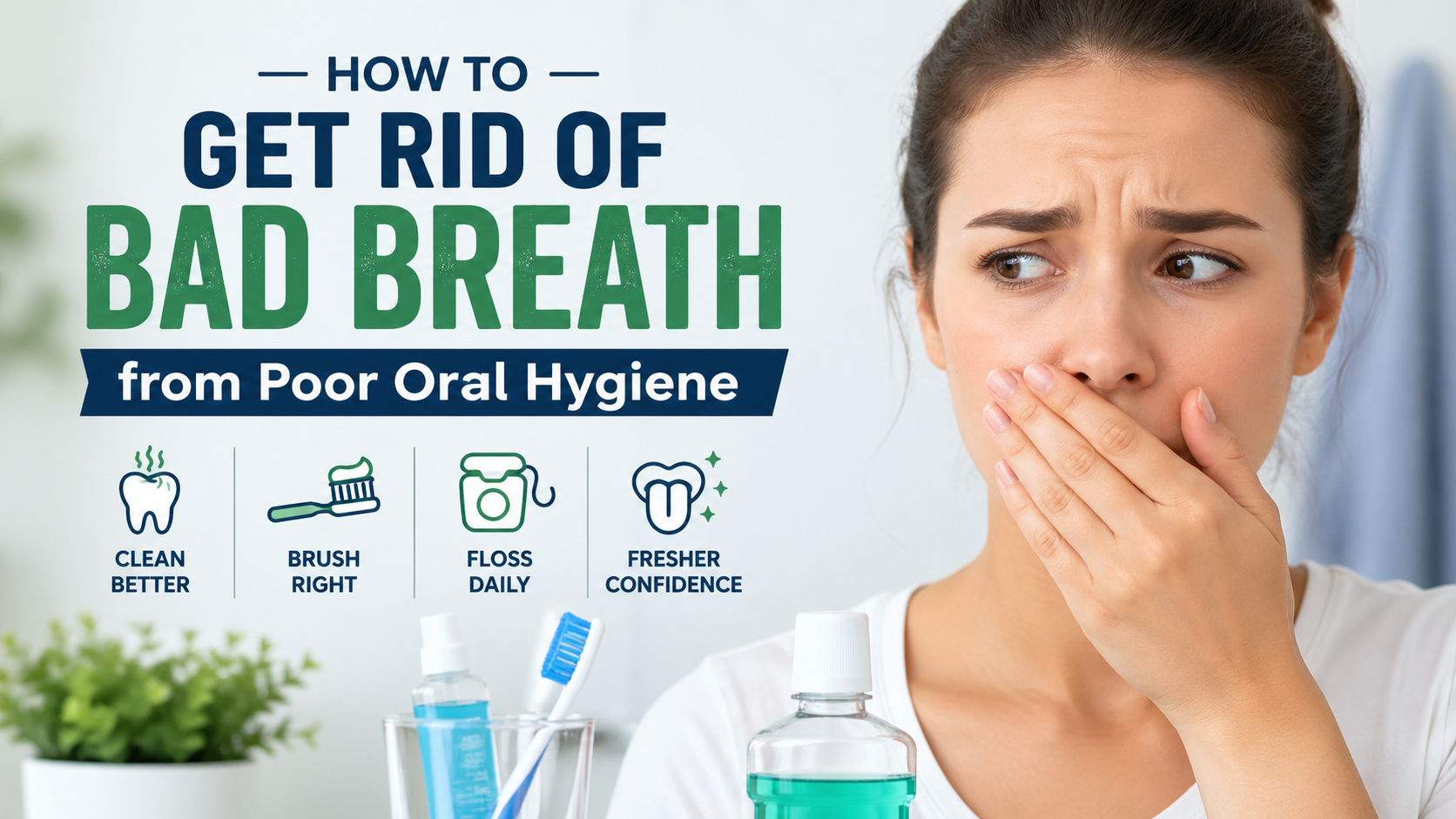
How to Get Rid of Bad Breath from Poor Oral Hygiene
Bad breath from poor oral hygiene is one of the most common and most fixable issues out there. The tricky part? Most people think brushing alone is enough. It isn’t.
If you’ve ever brushed your teeth and still noticed bad breath 20 minutes later… this guide is for you.
What Causes Bad Breath from Poor Oral Hygiene?
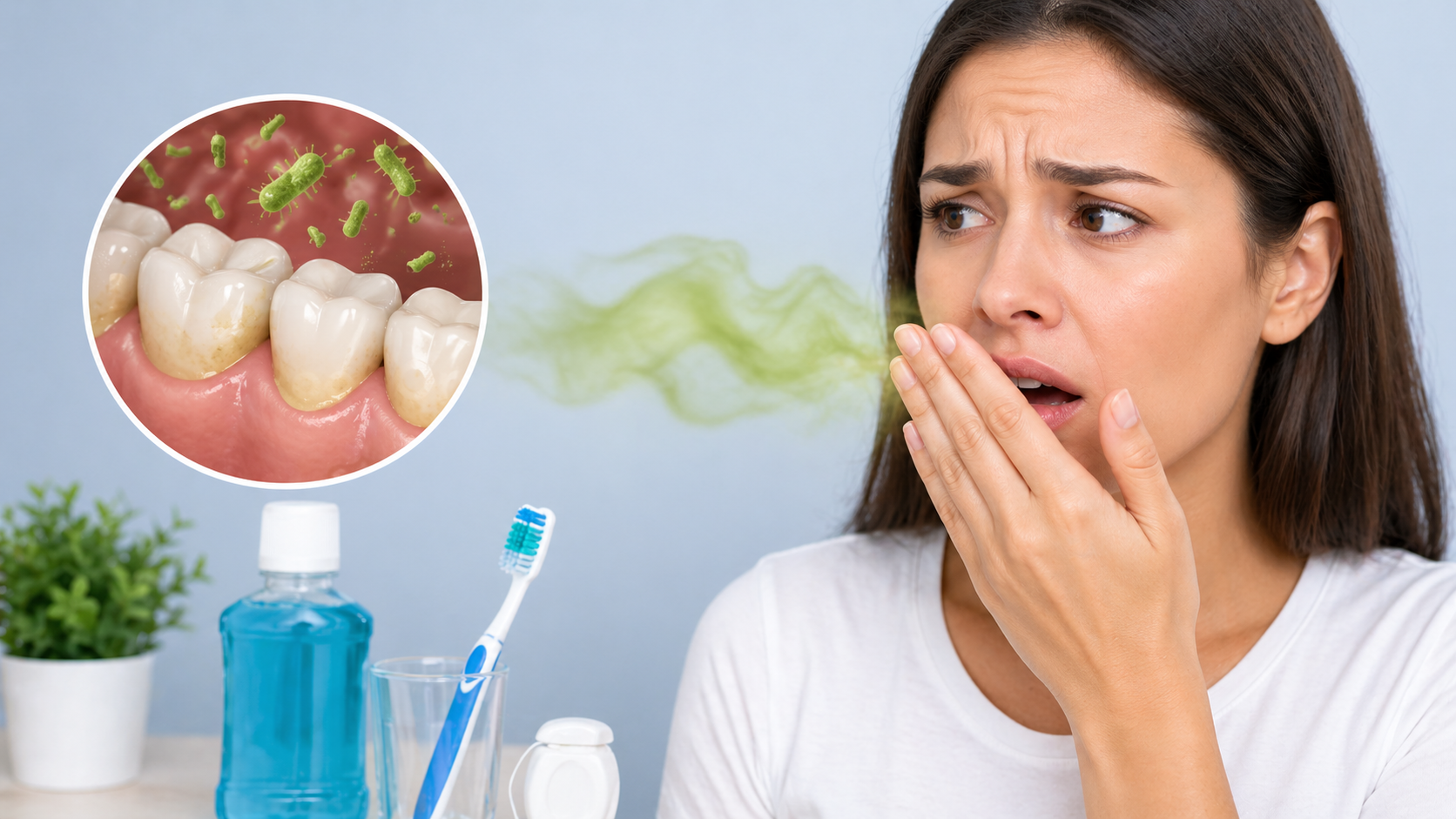
At its core, it comes down to bacteria. Your mouth naturally contains bacteria that break down leftover food particles. When they do, they release sulfur compounds, the stuff that smells.
Here’s where things usually go wrong:
- Food gets trapped between teeth
- Plaque builds up along the gumline
- A coating forms on the tongue
That combination creates the perfect environment for odor. And brushing alone? It only handles part of the problem.

Signs Your Bad Breath Is Caused by Oral Hygiene
Not all bad breath has the same cause. But when it’s hygiene-related, the signs are pretty consistent. You might notice:
- Breath that stays unpleasant throughout the day
- A white or yellowish coating on your tongue
- You rarely (or inconsistently) floss
- Your mouth feels “unclean” even after brushing
If this sounds familiar, there’s a good chance bacteria buildup is the main issue—not something more complex.
The Routine That Actually Fixes It
Let’s keep this practical. No complicated systems, just what works.
1. Brush properly (not just quickly). Two minutes. Twice a day. Focus on the gumline, this is where bacteria hide, and the back teeth (often missed). If you rush through it, you’re leaving a lot behind. Most people do.
2. Floss daily (this is the game-changer). This is where things shift. Bad breath often comes from between your teeth, not the surface. Brushing can’t reach those areas. If you skip flossing, you’re basically leaving food to sit and break down. Not ideal. If you’re not sure where to start, floss at night. It tends to stick better as a habit.
3. Clean your tongue. This one’s underrated. Your tongue—especially the back—can hold a thick layer of odor-causing bacteria. A tongue scraper works best, but even your toothbrush is better than nothing. If you’ve ever noticed a coating there, that’s likely contributing to the smell.
4. Use a targeted mouthwash (optional, but helpful). Not all mouthwashes are equal. Some just mask odor for a few minutes. Others actually reduce bacteria. Look for:
- Alcohol-free formulas (less drying)
- Antibacterial ingredients
That said, this works best as a supporting step, not the main solution.
Common Mistakes That Make It Worse
This is where a lot of people get stuck.. Only brushing (and skipping everything else) It feels like enough, but it’s not. Brushing handles maybe 60% of the problem. The rest? Between teeth and on your tongue.
Relying on minty products. Mints, gums, and a strong mouthwash, can help temporarily. But they don’t fix the source. It’s like spraying cologne instead of showering. You get the idea.
Brushing too fast (or too hard). Going aggressive doesn’t make it more effective. In fact, it can irritate your gums, which may lead to other issues over time. Slow and consistent tends to work better.
How Long Does It Take to See Results?
Usually, pretty quickly. If your bad breath is mainly from hygiene:
- You might notice improvement in 2–3 days
- More consistent freshness within 1–2 weeks
That’s assuming you’re actually flossing and cleaning your tongue—not just brushing more often. It’s one of those small changes that genuinely makes a difference.
Real-Life Situations (Where This Matters Most)
Let’s make this a bit more practical.
- Busy mornings: A quick brush alone won’t cut it—this is where tongue cleaning helps
- After meals: Food gets trapped easily; even a rinse or floss later helps
- Before social events: Flossing beforehand often has more impact than brushing again
Simple adjustments. But they add up.
Prevention Tips for Long-Term Fresh Breath
Once things improve, keeping them that way is easier than you’d expect.
- Replace your toothbrush every 3 months
- Stay hydrated (dry mouth makes things worse)
- Don’t skip dental cleanings
- Keep your routine simple enough to stick to
If you’re consistent, you won’t need to “fix” bad breath, you’ll just avoid it.
When It Might Be Something Else
If you’ve been consistent for a couple of weeks and nothing improves, it may not be just hygiene. In some cases, bad breath is linked to things like:
Early gum issues like gingivitis
Or other underlying factors beyond your daily routine.
That said, most people see improvement just by fixing the basics first.

A Simple Daily Checklist
If you want something easy to follow:
Morning. Brush, and clean tongue.
Night. Brush, floss, and clean tongue.
During the day. Stay hydrated, and sugar-free gum after meals (optional).
Final Tips
Bad breath from poor oral hygiene isn’t complicated. It’s just often incomplete routines. Once you cover teeth + gums + tongue, things usually improve fast.
If you’re not sure what’s causing your breath specifically, taking our What’s Causing Your Bad Breath? Quiz, or doing a simple self-check can help point you in the right direction. Because once you know the cause, fixing it becomes a lot easier.
 using WordPress and
Comments are closed